

Tesla vs Sigenergy: Which Battery Is Right for You?
We compare Tesla Powerwall and Sigenergy systems across performance, features, pricing and value to help you choose with confidence.
Lower Bills
Energy Security
Smart Control
Sustainable Choice
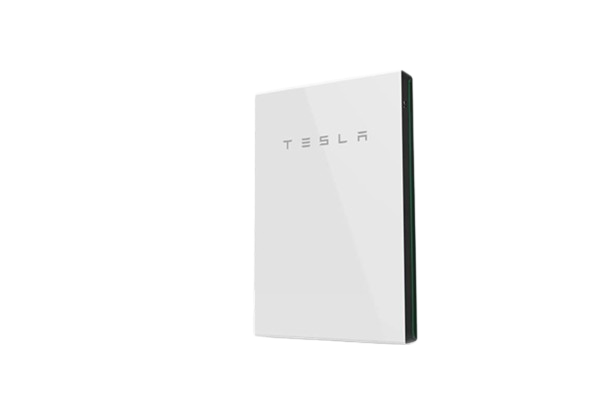
TESLA POWERWALL 3
-
Usable Capacity
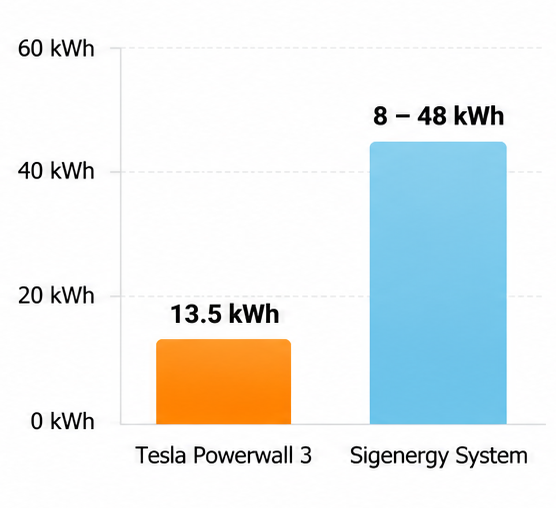
13.5 kWh -
Warranty
10 Years -
Round-Trip Efficiency
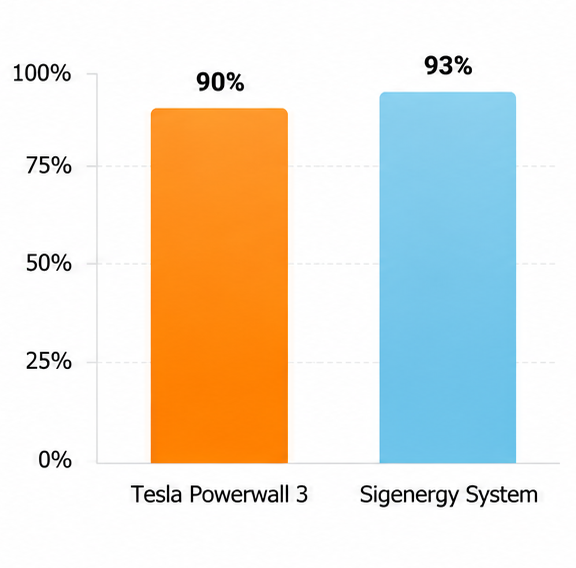
90% -
Scalability
Up to 4 units (54 kWh) -
Backup Power
Whole home (3-phase) -
Smart App
Tesla App
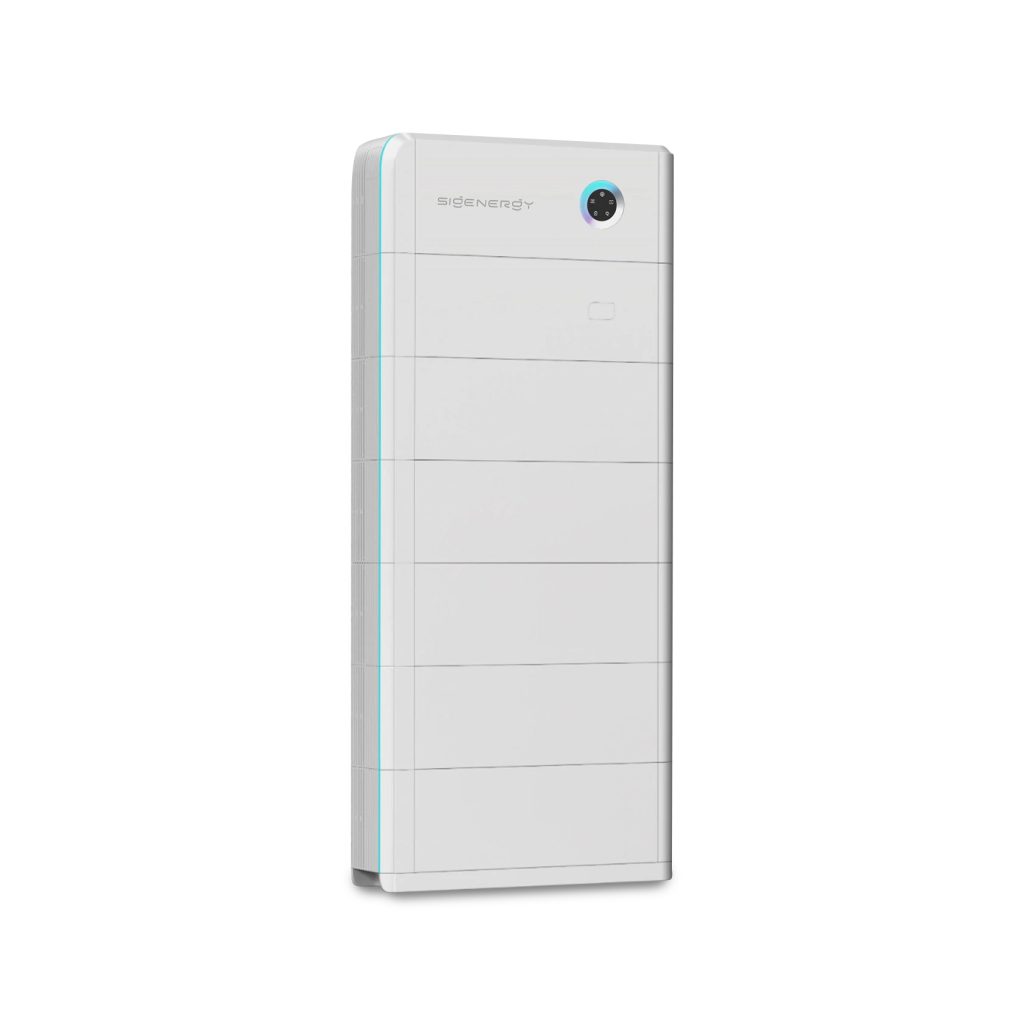
SIGENERGY S-ENERGY SYSTEM
-
Usable Capacity
8.0 – 48.0 kWh (modular) -
Warranty
10 Years -
Round-Trip Efficiency
93% -
Scalability
Up to 6 modules (48 kWh) -
Backup Power
Whole home (single/3-phase) -
Smart App
MySigenergy App
FEATURE SCORECARD
- Usable Capacity
- Efficiency
- Scalability
- Backup Power
- Warranty
- Smart Features)
- Value for Money
TESLA POWERWALL 3
4.5
4.5
4
4.8
4.5
4.5
4
SIGENERGY S-ENERGY SYSTEM
4.5
4.8
4.8
4.5
4.6
4.5
4.7
BATTERY PERFORMANCE
ROUND-TRIP EFFICIENCY
USABLE CAPACITY RANGE
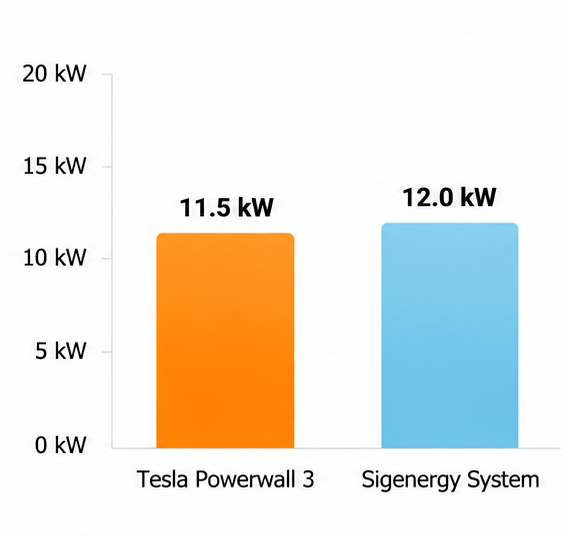
POWER OUTPUT (PEAK)
FREQUENTLY ASKED QUESTIONS
Which battery lasts longer?
Both the Tesla Powerwall 3 and the Sigenergy S-Energy System come with an industry-standard 10-year warranty. However, battery lifespan is also determined by throughput and degradation over time. Sigenergy utilizes highly stable Lithium Iron Phosphate (LFP) chemistry which typically offers superior thermal stability and a higher lifecycle count, while Tesla's robust integrated thermal management ensures optimal cell conditioning to maximize its 10-year warrantied performance.
Can both systems provide backup during a blackout?
Yes, both systems are fully capable of protecting your home from power outages, but they handle it differently. The Tesla Powerwall 3 features an integrated whole-home backup gate, allowing it to supply up to 11.5 kW of continuous power to your 3-phase or large single-phase loads seamlessly. The Sigenergy S-Energy System features a unique modular backup configuration supporting both single and 3-phase setups, offering rapid millisecond-level switching so your appliances don't even blink when the grid drops.
Which battery is better for solar self-consumption?
Sigenergy holds a slight mathematical advantage here with a 93% round-trip efficiency compared to Tesla's 90%. This means you lose less energy when storing it and pulling it back out of the battery later. However, if your solar system is sized precisely to your household load, both systems will effectively ensure you use close to 100% of your generated clean energy during peak evening rates instead of exporting it cheaply to the grid.
What's the difference in installation?
The core difference lies in their architectural designs. The Tesla Powerwall 3 is an all-in-one system with a built-in solar inverter, making it ideal for brand-new installations because you don't need a separate solar inverter on the wall. Sigenergy is a fully modular, stackable system where the inverter and battery modules stack cleanly like building blocks. This makes Sigenergy far easier to expand in the future if your energy footprint grows, as an installer can simply slide an extra battery block into the existing stack without complex rewiring.
Which battery offers better value?
Sigenergy offers a lower upfront entry point (starting from $11,990) because of its scalable 8 kWh modular design, making it the better choice if you want storage security on a budget or have a smaller solar system. Tesla Powerwall 3 (starting at $14,990) delivers massive out-of-the-box value for larger households because it includes a 13.5 kWh capacity and a built-in hybrid solar inverter all under one premium, globally trusted ecosystem.
GET EXPERT BATTERY ADVICE
Not sure which battery is right for your home?
Our local experts are here to help.