
Solar vs Grid Electricity
Make the smart switch to solar and take control of your energy future.
- Slash your energy bills
- Increase your home value
- Power your home with clean energy
Compare solar energy with traditional grid electricity
The Clear Choice
Solar Energy
- Low operating costs
- Energy independence
- Environmentally friendly
- Increase property value
- Protection from rising prices
From $1.20 per day*
for a typical home
Grid Electricity
- High and rising costs
- Dependence on energy companies
- Environmental impact
- No return on investment
- Price increases out of control.
From $4.50 per day*
for a typical home
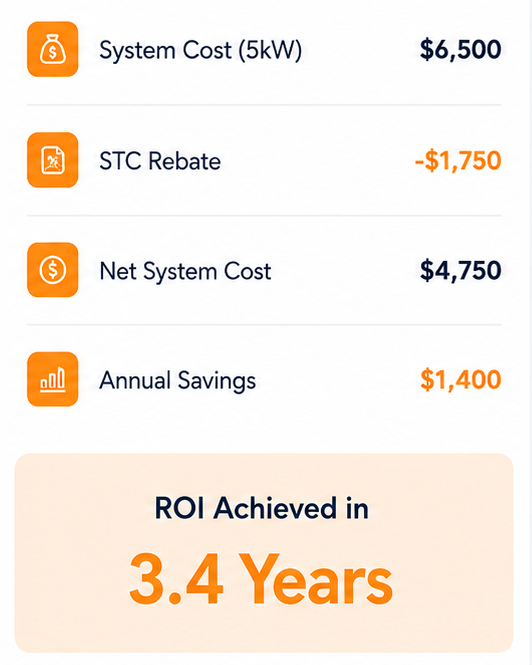
$1400 +
Average Annual Savings
3-5 Years
Average Payback Period
20-25 Years
System Lifespan
1000+
Australian Homes Powered
Financial Deep-Dive & ROI Analytics
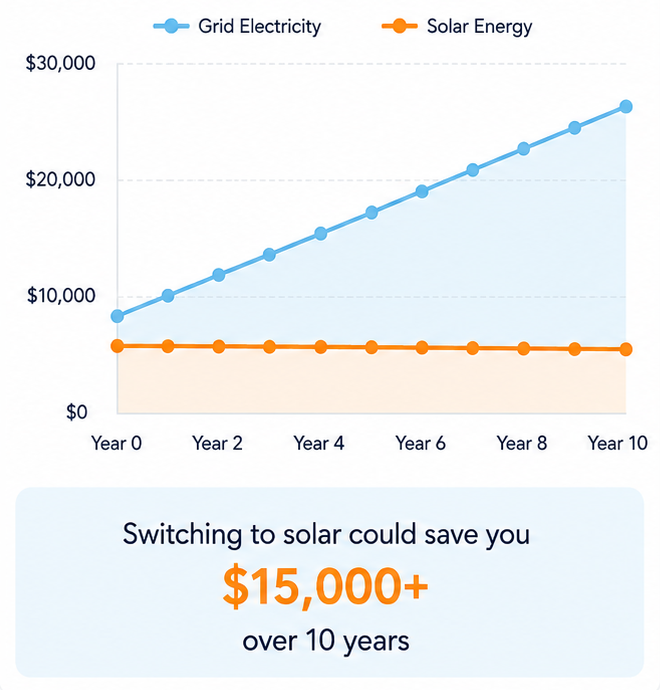
Cost Comparison Over 10 Years
Your Return on Investment
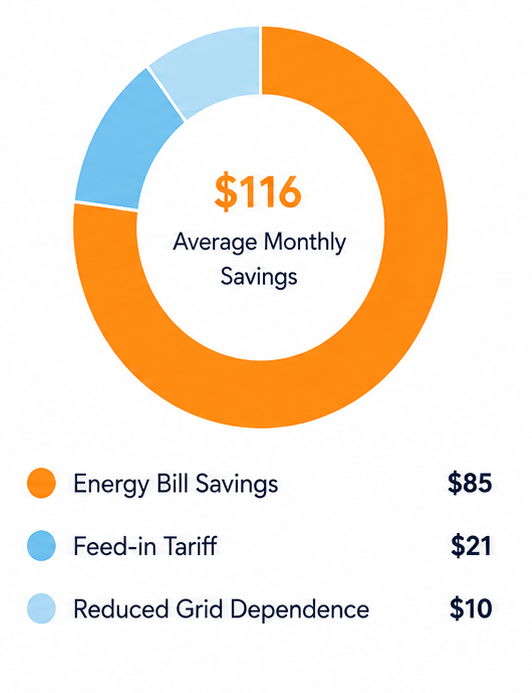
Monthly Savings Breakdown
Why Australians Are Making the Switch
Clean & Renewable
Reduce your carbon footprint
Save Money
Lower bills and lock in energy savings
Energy Independence
Take control of your energy future
Increase Property Value
Add value to your home
Government Rebates
Take advantage of solar incentives
Low Maintenance
Reliable systems with long warranties
FREQUENTLY ASKED QUESTIONS
Is solar energy reliable in Australia?
Absolutely. Australia has some of the highest solar irradiance levels in the world, making it one of the most reliable environments on earth for solar power generation. Modern Tier-1 solar panel systems are engineered with weather-resistant, tempered glass to withstand harsh conditions, including extreme heat and hail. When paired with a premium inverter or hybrid storage solution, your system dynamically manages power production to ensure a seamless, reliable energy supply for your home.
How much can I save with solar?
On average, an Australian household shifting to a standard solar layout can save $1,400+ annually on their power bills. Your exact savings depend on your location, your current energy consumption habits, and the size of your solar array. By running heavy appliances (like washing machines, pool pumps, and air conditioning) during peak daylight hours, you maximize your self-consumption and drastically cut your reliance on expensive grid electricity.
What rebates and incentives are available?
The Australian Federal Government offers a substantial upfront incentive via Small-scale Technology Certificates (STCs), which acts as an immediate discount on your system purchase and installation costs, saving you thousands of dollars up front. Depending on your state (such as specific solar battery savings programs or interest-free loans in certain areas), you may be eligible for additional local rebates and feed-in tariffs that pay you for sending excess clean energy back to the grid.
How long does it take for a solar system to pay for itself?
The average payback period for a high-quality solar system in Australia is typically between 5 to 7 years. Because electricity prices from the grid continue to rise, your system begins saving you money from day one. After the system pays for itself through reduced bills, the energy it generates for the remainder of its 20 to 25-year lifespan is essentially pure profit for your household.
What happens to my solar system on cloudy or rainy days?
Your solar panels will still generate electricity on cloudy or overcast days, though their output will be lower than under full, direct sunlight. Modern, high-efficiency solar panels are designed to capture ambient diffuse light and can still operate at around 10% to 25% of their peak capacity during heavy cloud cover. For nighttime and stormy periods, your home will seamlessly draw power from the grid (or from a home battery storage system if you have one installed) so you never experience an interruption.
Not sure if solar is right for you?
Our solar experts are here to help you make the best decision for your home.